
OpenCompany · Hive mind
Why agents should answer before they read the room
Three agents agreeing is usually one guess repeated. A blind first round and one change of wording took a team of agents from 16% to 67% correct.
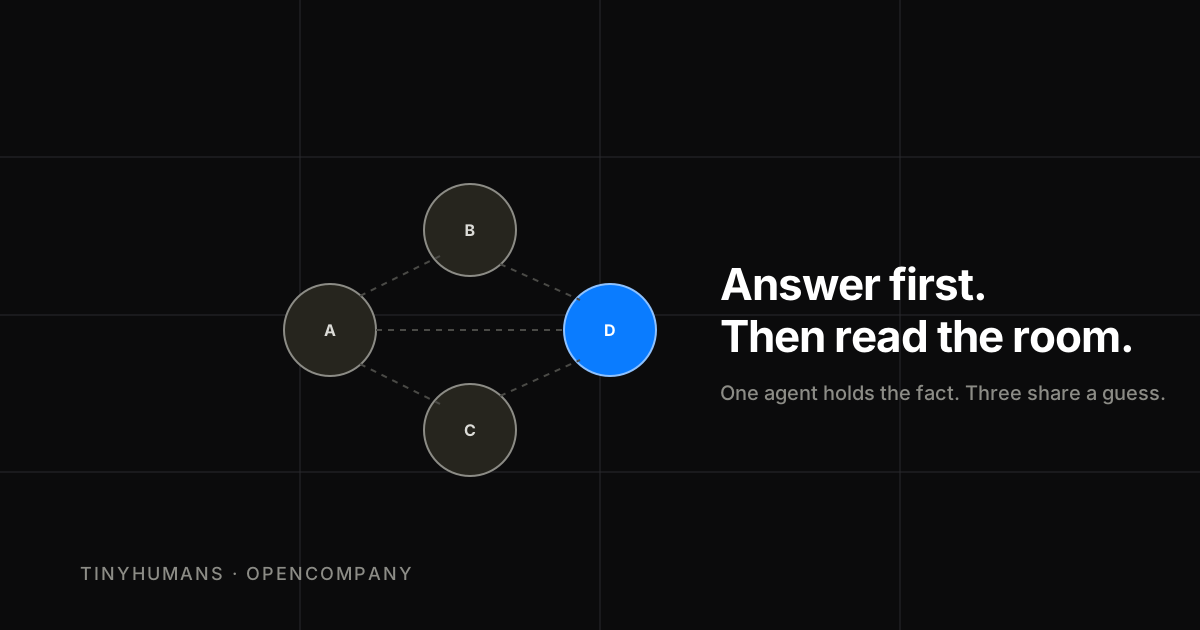
Put three AI agents in a room and ask them a hard question. Odds are you get the same answer three times, followed by a confident "we agree." It looks like a team reaching a conclusion. It is one model's guess, repeated.
We ran into this building OpenCompany, and the fix turned out to be small, measurable, and a little counterintuitive.
The problem with a shared transcript
When agents share a conversation, the third one to speak has already read the first two. Language models are agreeable by nature, so it agrees. By the time the one agent who actually knows the deciding fact gets a turn, the room has already settled.
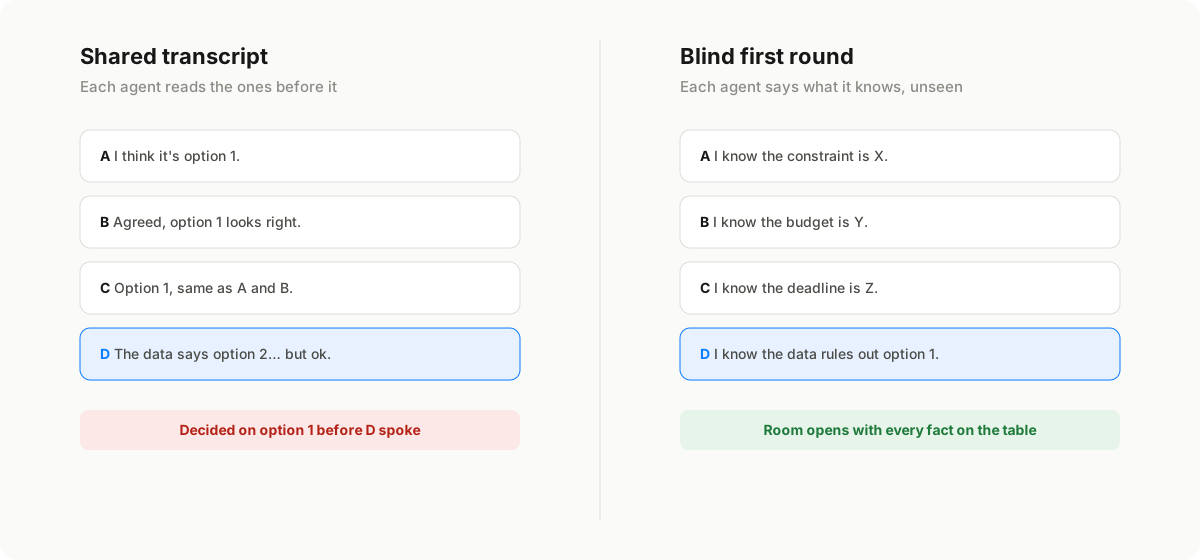
This is worst exactly where a team of specialists should shine. Give a maths problem to a theorist, a programmer, a checker, and an archivist, and one of them usually holds the fact that decides it. If that agent speaks fourth, its fact arrives after the decision.
What we changed
Two things.
First, the opening round is blind. Every agent gives its take before it can read anyone else's. Nobody can agree with the room, because nobody has seen the room yet.
Second, and this one surprised us, we changed what we ask for. The prompt used to say "form your own view first." That sounds right and it fails badly: each agent opens by arguing for whatever its own reading favours, and the option most of them lean toward wins before the informed agent has spoken. Now the prompt asks each agent what it knows, not what it would pick. A deposit of facts, not a position.
What it did
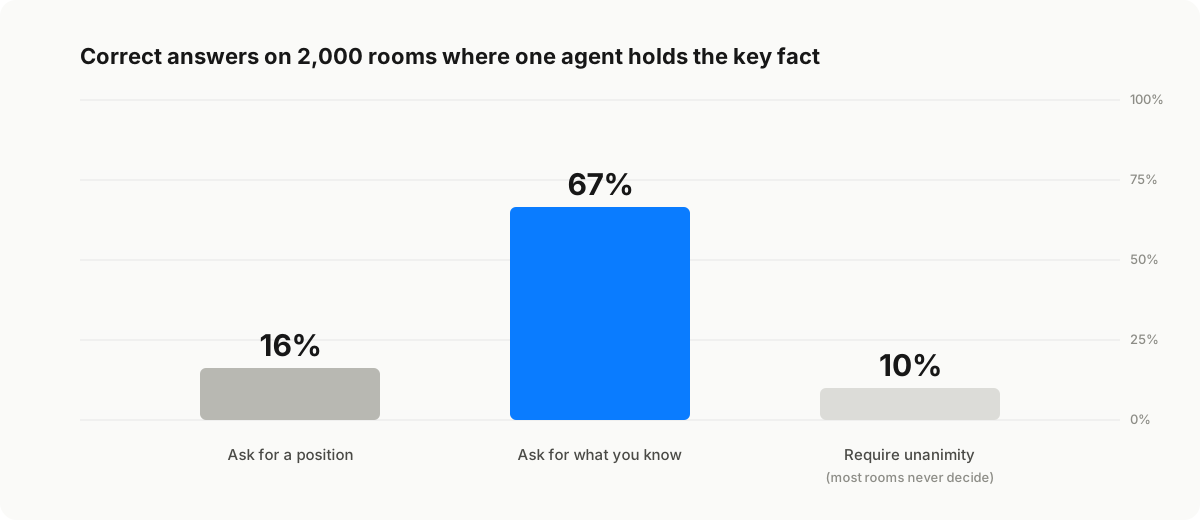
We measured this on 2,000 seeded rooms where one member holds the key fact and the others share a plausible but wrong prior.
- Asking for a position: 16% correct
- Asking for what you know: 67% correct
On rooms where every agent's reading is equally good, the change cost about four points. We will take that trade every time, because the first kind of room is the one you actually build a team for.
We also tried the obvious alternative, requiring more of the room to agree before a decision counts. At unanimity the team simply stopped deciding: less than a third of discussions reached any answer, and those that did were right 10% of the time. The bar was never the problem. What the bar counted was.
Why this matters beyond maths puzzles
Any team of agents has this shape. A marketing desk where one agent has read the analytics. A legal desk where one agent has read the contract. A support desk where one agent has seen the ticket history. The value of the team is the fact that only one of them holds, and a shared transcript is the quickest way to bury it.
This is the first of the mechanics behind OpenCompany's hive mind teams. The next post covers why support has to point at evidence, and what happens when it doesn't.
If you want to see it run, the Math Lab template seats six agents on one desk and works through Project Euler problems in the open.